

Price of 25 Litres of Palm Oil Today: Imagine this, It’s a Saturday morning in Lagos. You’re planning your family’s meals for the entire month – egusi soup, jollof rice, yam porridge, stewed beans — and you know that every single one of those meals will need palm oil. You head to the market, or maybe you ask your neighbour how much palm oil is going for these days, and the number they throw at you makes your jaw drop.
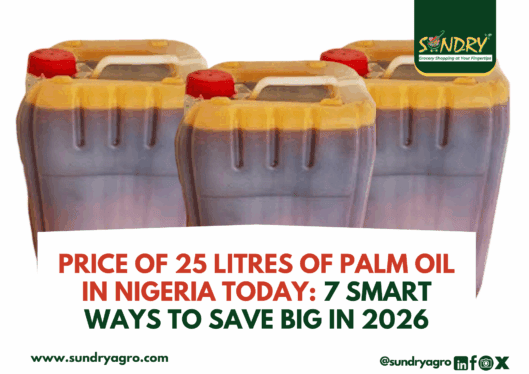
You’re not alone. The price of 25 litres of palm oil in Nigeria today has become one of the most searched food-related queries online – and for good reason. Red oil (as we lovingly call it) is no longer just a cooking ingredient. In 2026, it has become a financial decision.
Whether you’re a busy professional in Victoria Island, a mum planning weekly meals in Surulere, or a caterer managing food costs in Ikeja, this guide is written specifically for you. We’ll break down current palm oil prices, what’s driving them up, how to spot genuine quality, and — most importantly — how to stop overpaying.
Let’s get into it.
What Is the Price of 25 Litres of Palm Oil Today?
If you’ve been wondering about the price of 25 litres of palm oil in Nigeria today, here are the current market realities as of 2026:
| Location/Source | Price Range (25L Keg) |
|---|---|
| Open market (South-South/South-East) | ₦45,000 – ₦60,000 |
| Lagos open market (Mile 12, Oyingbo) | ₦55,000 – ₦75,000 |
| Supermarkets & branded retailers | ₦70,000 – ₦85,000 |
| Online grocery platforms (e.g., Sundry Agro) | ₦55,000 – ₦72,000 |
These figures are approximate and can shift based on season, availability, and how close you are to palm oil producing states like Rivers, Cross River, Delta, and Imo.
Price of 25 Litres of Palm Oil today
For those specifically searching for the price of 25 litres of palm oil in Lagos today, expect to pay a premium compared to the south-eastern states. Lagos is far from the producing regions, which means transport costs, storage, and handling fees add up. A 25-litre keg in Lagos markets currently ranges from ₦55,000 to ₦75,000, depending on the seller and whether the oil is processed, refined, or raw.
At Mile 12 market — one of Lagos’s largest food hubs — traders sell palm oil by the keg with prices varying wildly depending on season and supplier relationships. In Oyingbo market in Ebute Metta, similar kegs are available, often at slightly lower prices due to competition.
The rule of thumb? The closer you are to the source, the cheaper your palm oil.
Why Is the Current Palm Oil Price So High?
Understanding why the current palm oil price has risen so sharply helps you make smarter buying decisions. Here are the key drivers:
1. Naira Devaluation and Inflation
Nigeria’s inflation rate has had a direct knock-on effect on food commodity prices. As the naira weakened against the dollar, import costs for equipment, fertilisers, and farm inputs increased — and those costs were passed to consumers. Even locally produced palm oil has felt the impact.
2. Seasonal Harvesting Cycles
Palm fruit is harvested primarily between March and December. Outside this window, especially in January and February, palm oil supply drops and prices spike. If you’re buying in the off-season, you’ll almost certainly pay more.
3. Transportation and Distribution Costs
Fuel prices affect everything in Nigeria. Moving a truckload of palm oil from Imo State to Lagos now costs significantly more than it did three years ago. Middlemen factor these costs into their selling price.
4. High Demand During Festive Seasons
During Ramadan, Christmas, Easter, and other cultural celebrations, demand for palm oil surges dramatically. Markets in Lagos can see prices jump by 15–25% during these periods. If you buy reactively — only when you’ve run out — you’ll always pay peak price.
5. Adulteration and Quality Issues
Here’s a fact most buyers don’t know: not all palm oil on the market is pure. Some sellers mix their product with lower-quality oils or use chemical colouring to make diluted oil look fresh. This means you might pay ₦60,000 for a keg and still not get your money’s worth.
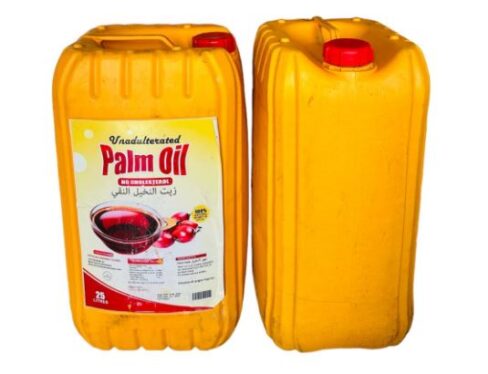

The Ultimate Buyer’s Guide – How to Buy Palm Oil Smartly in Nigeria
Now that you understand pricing, let’s talk strategy. Here are 7 proven, essential tips to help you buy palm oil smarter in 2026.
Tip 1: Buy in Bulk Before the Off-Season
The most powerful move any smart Nigerian household can make is to buy during harvest season (March–November) when supply is at its highest and prices are at their lowest. A 25-litre keg bought in July could cost ₦10,000–₦15,000 less than the same keg in January.
If storage space is a concern, purchasing two or three kegs during peak season and storing them properly can translate to serious savings over twelve months.
Tip 2: Source Directly (or from Trusted Verified Suppliers)
The longer the supply chain, the more you pay. Open-market traders often buy from wholesalers who buy from distributors who buy from processors. Each layer adds cost.
Platforms like Sundry Agro cut through this chain by sourcing palm oil directly and making it available for home delivery in Lagos. You get verified quality without the market stress.
Tip 3: Never Judge Palm Oil by Colour Alone
Bright, deep-red colour does not always equal quality. Some sellers add artificial colouring to make adulterated oil look premium. Genuine, fresh palm oil has:
- A rich, natural aroma (earthy, slightly smoky)
- A semi-solid consistency at room temperature (it solidifies in the cold)
- No sour or rancid smell
- A clean taste without bitterness
If the oil smells odd, stays liquid at room temperature in cool weather, or looks suspiciously bright, be cautious.
Tip 4: Compare the Price Per Litre, Not Just Per Keg
This is a mistake many buyers make. When comparing prices, always calculate the cost per litre:
- ₦60,000 for 25 litres = ₦2,400 per litre
- ₦45,000 for 18 litres = ₦2,500 per litre
A “cheaper” keg is not always cheaper. Always divide the price by the volume.
Tip 5: Buy Grocery Bundles Instead of Individual Items
Here’s a secret most busy Lagos families haven’t figured out yet: you save significantly more when you buy palm oil as part of a grocery bundle rather than as a standalone item.
Think about it. On any given market run, you’re buying rice, beans, groundnut oil, seasoning, garri, and crayfish — alongside your palm oil. When each item is bought separately from different vendors, you lose time, spend more on transport, and often pay retail prices for everything.
Sundry Agro’s grocery bundles package your essential food items together, delivering them to your doorstep at combined prices that are almost always lower than buying each item one-by-one. It’s the smarter, more convenient way to stock your kitchen.
Tip 6: Watch Out for These 5 Red Flags When Buying Palm Oil
Before you pay, run through this quick checklist:
- Seller cannot tell you the state of origin of the oil
- Oil stays completely liquid in cool temperatures
- Price is suspiciously lower than the market average (often a sign of dilution)
- Oil has a strange, sour, or chemical smell
- Keg appears resealed or has signs of tampering
Tip 7: Use Online Grocery Delivery to Lock In Fair Prices
One of the most underrated advantages of ordering palm oil online — especially in Lagos — is price consistency. Street markets can change their prices daily based on mood, supply, and how much they think you look like you can afford. Reputable online stores like Sundry Agro display their prices transparently, and you’re never subjected to the “oga, price don go up” conversation.
Plus, delivery to your home or office means no transport costs, no time wasted in traffic, and no risk of getting a different keg from what you inspected.
Price of 25 Litres of Palm Oil Today in Nigeria – State-by-State Breakdown
The price of 25 litres of palm oil today in Nigeria varies significantly by region. Here’s what buyers are currently experiencing across key states:
Lagos State
As discussed, Lagos commands some of the highest palm oil prices in the country. A 25L keg sells for ₦55,000 – ₦75,000. The Lagos lifestyle demands convenience, and many residents are now turning to online delivery as the easiest way to get quality oil without the stress of market runs.
Abuja (FCT)
Being far from palm-producing states, Abuja often sees prices even higher than Lagos — up to ₦80,000 or more for a genuine 25L keg. Supply here depends heavily on inter-state distributors.
South-Eastern States (Imo, Anambra, Enugu)
These states are closest to major palm oil production zones, and prices here are noticeably lower. A 25L keg can be found for ₦40,000 – ₦55,000 depending on season and source.
South-South (Rivers, Delta, Cross River)
As production states, these areas enjoy some of the best prices — ₦35,000 – ₦50,000 for a 25L keg. However, consumers here need to remain vigilant about adulteration, which ironically is common even in producing areas due to high local demand.
Palm Oil vs. Other Cooking Oils – Is It Worth the Price?
Given the current palm oil price, some Nigerian consumers are asking: should I switch to groundnut oil or vegetable oil?
Here’s an honest comparison:
| Oil Type | Avg. Price Per Litre (Lagos) | Smoke Point | Local Availability | Nutritional Value |
|---|---|---|---|---|
| Palm oil (red) | ₦2,200 – ₦3,000 | High (232°C) | Very High | Rich in Vitamins A & E |
| Groundnut oil | ₦2,000 – ₦3,500 | Very High | Moderate | Heart-healthy fats |
| Vegetable oil | ₦1,500 – ₦2,500 | High | Very High | Lower nutrient density |
| Olive oil | ₦6,000 – ₦12,000 | Medium | Low | High in monounsaturated fats |
Palm oil remains the most culturally essential and widely used cooking oil in Nigeria. For Nigerian soups – egusi, banga, ofe akwu, efo riro – there is simply no substitute. Its unique flavour, rich colour, and high smoke point make it the preferred choice for both everyday cooking and special occasions.
According to research published on nutrition databases, palm oil (particularly unrefined red palm oil) contains beta-carotene and tocopherols — antioxidants that support immune function and eye health. See the USDA FoodData Central for nutritional breakdown.
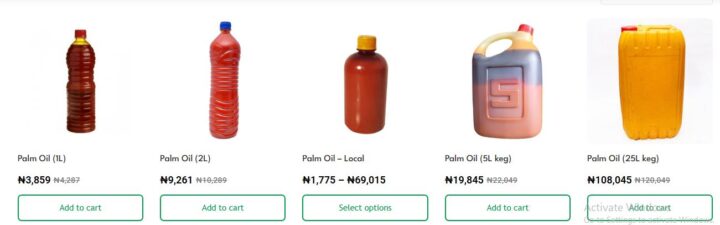
How Sundry Agro Solves Your Palm Oil Problem – Once and For All
You’ve read the prices. You know the red flags. You understand the seasonal patterns.
Now here’s the most important question: where should you actually buy your palm oil in Lagos and Nigeria?
This is where Sundry Agro comes in.
Why Busy Nigerians Trust Sundry Agro for Palm Oil
Sundry Agro is a Nigerian-based grocery and food supply brand built for modern, time-conscious families. Here’s what makes them different:
Quality Assurance Every product on Sundry Agro’s platform — including their 25L palm oil keg – is sourced from verified suppliers and quality-checked before it gets to your door. No mystery oils, no resealed kegs.
Transparent Pricing The price you see is the price you pay. No last-minute adjustments, no “oga, fuel price don affect am.” You can check the current palm oil price on their platform any time, without leaving your office or home.
Bulk Buying Made Easy Sundry Agro makes it easy to buy palm oil in quantity — which means you can stock up during low-price periods and save throughout the year. No need to carry a heavy keg from the market yourself.
Grocery Bundles for Maximum Savings Rather than buying your palm oil, rice, beans, crayfish, and garri from five different vendors at five different prices, Sundry Agro’s grocery bundles let you stock your kitchen in one smart order. You save money, save time, and eliminate the stress of repeated market visits.
Convenient Home Delivery in Lagos Whether you live in Lekki, Surulere, Yaba, Ajah, or Ikeja, Sundry Agro delivers your groceries right to your doorstep. For busy professionals who can’t afford to spend their Saturday afternoons haggling in Mile 12 market, this is genuinely life-changing.
Bundle vs. Buying One-by-One – The True Cost Comparison
Many Lagos households don’t realise how much they’re overspending by buying grocery items one at a time. Let’s break this down with a real-world example.
Monthly Grocery Basket: Individual Buying
| Item | Market Price |
|---|---|
| 25L Palm oil (keg) | ₦65,000 |
| 50kg bag of rice | ₦90,000 |
| 5kg beans | ₦8,500 |
| Crayfish (250g) | ₦4,500 |
| Seasoning cubes (pack) | ₦3,000 |
| Transport (3 market trips) | ₦6,000 |
| Total | ₦177,000 |
Monthly Grocery Basket: Sundry Agro Bundle
- Same items, bundled and delivered: potential savings of ₦10,000 – ₦20,000 depending on current bundle offers
- Zero transport cost
- Zero time cost (no queues, no haggling)
The math is clear. Buying in bundles from a trusted platform is not just more convenient — it’s provably cheaper.
Practical Tips – How to Store Your 25L Palm Oil Properly
Buying in bulk only saves you money if you store your palm oil correctly. Here’s a simple, essential checklist:
Storage Checklist for Palm Oil:
- Store in a cool, dark place away from direct sunlight
- Keep the keg tightly sealed when not in use
- Avoid storing near heat sources (stove, oven, gas cooker)
- Use clean, dry utensils when scooping — never introduce water into the keg
- Inspect monthly for any change in smell or consistency
- Properly sealed palm oil can last 6–12 months without quality loss
Palm oil is naturally resistant to rancidity compared to many other cooking oils, thanks to its high saturated fat content and antioxidant profile. This makes it ideal for bulk storage — which is another reason buying a 25L keg makes financial sense for Nigerian families.
Frequently Asked Questions About Palm Oil Prices in Nigeria
How much is a 25 litre keg of palm oil in Nigeria?
As of 2026, the price of 25 litres of palm oil in Nigeria today ranges from ₦45,000 in producing states to ₦85,000 in cities like Lagos and Abuja. Prices vary by quality, season, and source.
What is the price of 25 litres of palm oil today in Lagos?
In Lagos, a 25L keg of palm oil currently costs between ₦55,000 and ₦75,000 in open markets. On verified online grocery platforms like Sundry Agro, you can find competitive pricing with the added benefit of home delivery.
Is palm oil cheaper in bulk?
Yes. Buying palm oil in bulk — particularly a 25L keg versus multiple 1L bottles — almost always works out cheaper per litre. For households that use palm oil regularly, bulk buying is the smarter financial choice.
Why is palm oil more expensive in Lagos?
Lagos is far from the palm oil producing regions in southern Nigeria. Transportation costs, storage fees, and multiple middlemen in the supply chain all add to the final price Lagos consumers pay.
Which month is palm oil cheapest?
Palm oil is generally cheapest between May and October, when palm fruits are in full harvest season. Prices typically peak in December through February, during the off-season and festive period.
Can I buy palm oil online in Nigeria?
Yes. Platforms like Sundry Agro sell genuine palm oil online with delivery across Lagos. This is one of the most convenient and cost-effective ways to buy palm oil without the stress of market visits.
Stop Overpaying for Palm Oil -Shop Smarter Today
The price of 25 litres of palm oil in Nigeria today is higher than most of us would like. Inflation, transportation costs, seasonal shortages, and a long supply chain all work against the average Nigerian consumer.
But here’s the truth: you don’t have to be at the mercy of these factors.
By buying in bulk during harvest season, sourcing from trusted platforms, watching for quality red flags, and taking advantage of grocery bundles, you can dramatically reduce what you spend on palm oil — and on groceries as a whole.
The families and households winning the food budget battle in 2026 are not the ones haggling in the market every weekend. They’re the ones who plan ahead, buy smart, and use platforms like Sundry Agro to make every naira count.
Ready to Buy Quality Palm Oil Without the Stress?
Sundry Agro makes it effortless.
- Genuine, verified 25L palm oil keg
- Transparent, fair pricing
- Convenient home delivery in Lagos
- Save more with grocery bundles
???? Shop Palm Oil on Sundry Agro Now
???? Explore Grocery Bundles and Save More
Don’t wait for prices to go higher. Stock up today and take control of your grocery budget — the smart way.
This article was written to help Nigerian consumers make informed purchasing decisions. Prices mentioned are approximate market estimates as of Q1 2026 and may vary by location, seller, and season. Always verify current pricing directly with your preferred supplier.