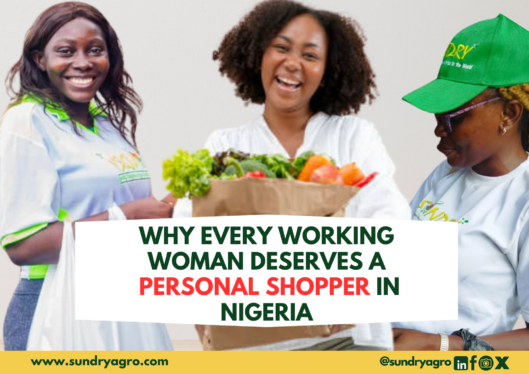


It is 6:45 p.m. on a Wednesday. The Third Mainland Bridge is a wall of brake lights; your last meeting ran twenty minutes over, and somewhere between the school WhatsApp group and your inbox, you remember there is no rice in the house. By the time you get to the supermarket, the good tomatoes are gone, the queue snakes past the drinks aisle, and you are doing mental arithmetic on a shrinking budget while your phone buzzes with three more “urgent” messages. This is not a bad day. For thousands of working women across Lagos and Nigeria, this is Wednesday.

A personal shopper Nigeria’s busiest professional women are quietly turning to is changing that story. Instead of losing evenings and weekends to traffic, queues and decision fatigue, a growing number of career women, entrepreneurs and mothers are outsourcing their grocery runs to a trusted service — and reclaiming their time, their budgets and their peace of mind in the process.
This article breaks down exactly why personal shopping has moved from “nice-to-have” to “non-negotiable” for Nigeria’s working women, what the research says about the hidden cost of time poverty, and how Sundry Agro’s Personal Shopping Service was built to solve this problem properly.
The Problem: Why Grocery Shopping Has Become a Silent Burden
Grocery shopping looks like a simple task on paper. In practice, for a working woman in Nigeria, it is a stack of smaller burdens layered on top of each other.
Decision Fatigue and the Mental Load
Long before anyone sets foot in a supermarket, the work has already begun: remembering what is running low, planning meals around a busy week, comparing prices in your head, and keeping track of everyone’s preferences and restrictions. Researchers call this “cognitive household labour” or the mental load, and studies consistently find that women carry a disproportionate share of it — the constant, invisible work of anticipating, planning and coordinating household needs, groceries included.
This isn’t just an inconvenience. A systematic review of unpaid labour and mental health found that combining a heavy unpaid workload with paid employment increases role strain and time poverty, both of which are linked to higher stress and poorer wellbeing, particularly for employed women.
Time Poverty Is Real and It’s Gendered
Global research on time poverty shows that when women are stretched between paid work and unpaid domestic responsibilities, they are left with little to no discretionary time — and that this time scarcity has measurable consequences for health, food choices and stress levels.
| A recent large-scale workplace study found that although women often log fewer paid hours than men, their combined paid-plus-unpaid workload is significantly higher — and this “extra shift” is one of the strongest predictors of poor sleep and mental strain in working women. |
Grocery shopping sits right at the centre of that extra shift. It is repetitive, time-bound (supermarkets close, fresh produce spoils) and impossible to fully delegate within most households — until now.
Lagos Traffic, Inflation and the Supermarket Queue Problem

On top of the mental load, Nigerian working women are dealing with three very local pressures:
- Traffic: A grocery run that should take 45 minutes can easily consume 2–3 hours once Lagos traffic is factored in, especially after work or on a Saturday morning.
- Inflation: Rising food prices mean every naira has to be planned for, and price comparison across markets and supermarkets takes time most women simply do not have.
- Queues and stockouts: Popular items sell out fast, and peak-hour queues at tills can add another 30–45 minutes to a single trip.
Individually, none of these feels dramatic. Stacked weekly, they add up to lost evenings, lost weekends, and a quiet, ongoing tax on a working woman’s time and energy — which is exactly the work-life imbalance a personal shopping service is designed to remove.
Why Personal Shopping Is No Longer a Luxury
A few years ago, having someone else do your grocery shopping sounded like something reserved for the wealthy or the extremely busy executive. That perception is outdated. As online grocery Nigeria platforms mature and delivery infrastructure improves, personal shopping has repositioned itself as a practical, affordable productivity tool – not an indulgence.
- Time savings: Delegating the sourcing, comparing and queueing frees up 8–16 hours a month for work, rest or family.
- Reduced stress: Outsourcing a recurring, high-friction task lowers the background stress that comes with juggling too many responsibilities at once.
- Better budgeting: A structured monthly grocery plan, built around bundles and bulk pricing, is easier to control than ad-hoc weekly trips.
- Better nutrition: With less decision fatigue, women are less likely to default to convenience food and more likely to stick to planned, balanced meals.
- Improved productivity: Time reclaimed from shopping trips flows straight back into work, business growth or rest — all of which compound over a month.
- Emotional wellbeing: One fewer recurring source of friction in a busy week has a real, cumulative effect on mood and mental bandwidth.
- Family life: Evenings and weekends freed from shopping errands can be redirected to children, partners, or simply rest.
Benefits of a Personal Shopper

Here is a closer look at what a dedicated personal shopping service — like Sundry Agro’s — actually changes in a working woman’s week.
Time and Convenience
The single biggest benefit is time. A shopping list sent by 9 a.m. can become a delivered order by evening, with zero time spent driving, parking, queueing or comparing shelves. For busy working women, that reclaimed time is often the difference between a rushed evening and a restful one.
Meal Planning Made Simple
A good personal shopping service does not just fetch items — it helps you plan. Weekly or monthly grocery planning built around your household’s actual meal patterns means fewer last-minute “what do we even have in the house” moments and less food waste.
Budget Control and Bulk Buying
Because a personal shopper sources consistently and in volume, working women benefit from bulk buying and bundle pricing that would be hard to access shopping alone, week to week. Monthly grocery packages also make it easier to set — and stick to — a food budget.
Reduced Impulse Buying
Anyone who has walked into a supermarket for “just bread and eggs” and left with a full trolley knows how easily in-aisle temptation drains a budget. Shopping from a pre-set list, curated by a personal shopper, removes most of that impulse-spending trigger.
Healthier Food Choices
With less exhaustion and decision fatigue at the point of purchase, women are better positioned to choose fresh produce and balanced options rather than whatever is fastest to grab at the end of a long day — a pattern also reflected in research linking time poverty to poorer food choices.
Professional Recommendations and Quality Assurance
A trained personal shopper knows how to select fresh produce, compare quality across suppliers, and flag better alternatives – expertise most busy professionals simply do not have time to develop themselves.
Reduced Mental Load
Perhaps the most underrated benefit: outsourcing grocery shopping takes an entire recurring category of “invisible work” off a woman’s mental to-do list, freeing up cognitive space for work, family and rest.
Why Working Women Need More Support
Nigerian working women are not just employees. Many are also business owners, caregivers, and the default household manager — often all at once.
- Career pressure: Meeting deadlines and managing office politics already demands full mental bandwidth.
- Business ownership: Women entrepreneurs Nigeria-wide are frequently running a business and a household with no separation between the two.
- Motherhood and caregiving: School runs, homework, healthcare appointments and elder care regularly fall disproportionately on women.
- Mental health and burnout: Global research on unpaid labour links a heavy combined workload — paid plus unpaid — to higher rates of psychological distress and poor sleep in women, particularly where domestic responsibilities are least evenly shared.
None of this is about working women being unable to “cope”. It’s about recognising that a finite number of hours in a day should be spent where they matter most — and that grocery shopping, one of the most repetitive and time-bound tasks on the list, is one of the easiest to delegate well.
Why Sundry Agro Is Different

Sundry Agro was built specifically around this problem: smart, reliable, premium-but-affordable grocery support for people who do not have hours to spare. Here’s what that looks like in practice:
- Personal Shopping Service: A dedicated shopper sources your list, compares quality and price, and prepares your order for delivery.
- Grocery Bundles: Pre-curated bundles built around real Nigerian household needs, so you are not starting your list from scratch every time.
- Fresh Produce: Vegetables, fruits and perishables selected for freshness, not just availability.
- Quality Assurance: Every order is checked before it leaves for delivery, so what you see is what you get.
- Bulk Buying: Access to bulk pricing on staples without the hassle of storing or transporting bulk quantities yourself.
- Affordable Pricing: Premium sourcing and service, priced for the realistic budget of a working household — not just the luxury end of the market.
- Doorstep Delivery: Reliable grocery delivery Lagos and beyond, so your order gets to you without you lifting a bag.
- Personalised Shopping: Your list, your preferences, your brands — Sundry Agro shops to your specification, not a generic template.
- Shopping Lists & Weekly Planning: Support building a working shopping list so nothing important gets forgotten.
- Monthly Grocery Planning: Structured monthly grocery packages that make budgeting and stock management dramatically simpler.
| The goal is simple: give working women back their evenings and weekends, without asking them to compromise on quality, freshness, or budget. |
Real-Life Nigerian Examples
These composite scenarios reflect the kinds of working women who benefit most from a personal shopping service — the names are illustrative, the situations are real and common.
The Banker in Victoria Island
Between 8 a.m. resumption and evening close-of-books, a bank relationship manager has almost no window for a supermarket run before closing time. A monthly grocery plan with doorstep delivery means her weekends are free for rest instead of errands.
The Doctor
Rotating shifts make it almost impossible to predict when supermarkets will even be open around her schedule. A pre-arranged weekly grocery delivery removes the guesswork entirely.
The Entrepreneur
Running a small business already means twelve-hour days. A grocery concierge service lets her spend that reclaimed time on clients and growth instead of queues.
The Working Mother
School runs, homework supervision and meal planning leave little room for anything else. Bundled weekly essentials and fresh produce delivery mean fewer last-minute dashes to the store.
The Remote Worker
Back-to-back video calls make it hard to “just step out.” Scheduled delivery slots fit around a home-office calendar instead of fighting it.
The Corporate Executive
Frequent travel and late meetings mean unpredictable time at home. A trusted personal shopper keeps the household stocked whether she is in Lagos or on the road.
Cost Comparison: Personal Shopping vs Traditional Grocery Shopping
Numbers make the case clearer than words. Here is how a typical month compares:
| Factor | Traditional Grocery Shopping | Sundry Agro Personal Shopping |
| Time spent per trip | 2 – 4 hours (traffic, queues, parking) | 0 hours — list sent, order delivered |
| Monthly time cost | 8 – 16 hours | Under 20 minutes to place an order |
| Fuel & transport | ₦8,000 – ₦15,000+ per trip | Included in delivery fee |
| Impulse purchases | High — in-aisle temptation | Minimal — you shop from a set list |
| Price comparison | Manual, time-consuming | Done for you across trusted suppliers |
| Quality control | Self-inspected, inconsistent | Vetted, fresh-produce quality checks |
| Stress & decision fatigue | High | Low — the mental load is outsourced |
| Bulk-buy savings | Rare, requires bulk transport | Built into monthly grocery packages |
When transport cost, fuel, time-off-work equivalent and impulse purchases are added up, traditional grocery shopping is rarely the “free” option it appears to be. A personal shopping service simply makes that cost visible — and then reduces it.
Frequently Asked Questions
Q: What does a personal shopper Nigeria service actually do?
A: A personal shopper sources, selects and delivers groceries and household essentials on your behalf, based on a list or preferences you provide — saving you the time and stress of shopping in person.
Q: Is a personal shopping service only for the wealthy?
A: No. Services like Sundry Agro are built around affordable pricing and bundled packages, making professional grocery support accessible to everyday working women, not just high-income earners.
Q: How much time does a personal shopper actually save?
A: Based on typical Lagos shopping trips of 2–4 hours (including traffic and queueing), most working women save between 8 and 16 hours a month by switching to a personal shopping service.
Q: Is grocery delivery in Lagos reliable?
A: With a structured service like Sundry Agro, delivery windows are scheduled and communicated in advance, and orders are quality-checked before dispatch, making delivery far more predictable than a rushed in-person trip.
Q: How do I start using a personal shopping service?
A: You typically share your grocery list or select from pre-built bundles, confirm your delivery address and preferred time, and the shopper handles sourcing, quality checks and delivery from there.
Q: Can I customise my grocery bundle?
A: Yes — personalised shopping means your shopper works from your specific list and brand preferences rather than a fixed, generic package.
Q: Does a personal shopper help with meal planning?
A: A good service supports weekly or monthly meal planning by aligning your grocery list with your household’s actual consumption pattern, reducing both waste and last-minute gaps.
Q: Will using a personal shopper actually save me money?
A: Bulk buying, bundle pricing and reduced impulse purchases typically offset — and often beat — the cost of a delivery or service fee, especially when transport and time costs are factored in.
Q: How fresh is the produce from a grocery delivery service?
A: Reputable services apply quality checks on fresh produce before dispatch. Ask your provider directly about their sourcing and inspection process — Sundry Agro checks freshness on every order before it leaves for delivery.
Q: Is personal shopping only about groceries?
A: While grocery and household essentials are the core, many personal shopping services — including Sundry Agro — also support broader household supply needs as part of monthly planning.
Q: Can working mothers benefit from monthly grocery planning?
A: Yes — monthly grocery planning is one of the highest-impact tools for working mothers, since it removes the need for frequent, unplanned trips around an already packed schedule.
Q: How do I know if a personal shopping service is trustworthy?
A: Look for transparent pricing, clear communication, quality-assurance steps before delivery, and a track record of reliable doorstep delivery — all standard with an established provider like Sundry Agro.
Expert Tips for Smarter Grocery Management

Meal Planning
Plan meals a week (or a month) at a time, working backward from what your household actually eats, rather than shopping reactively item by item.
Saving Money
Buy staples in bulk where storage allows, take advantage of bundle pricing, and separate “needs” from “wants” before you shop — not while you’re standing in the aisle.
Creating Shopping Lists
Keep a running list on your phone as items get low, rather than trying to reconstruct your household’s needs from memory the night before a shopping trip.
Reducing Food Waste
Match your grocery quantities to your realistic consumption pace, and prioritise fresh produce with a shorter shelf life for the earliest meals in your plan.
Smart Grocery Budgeting
Set a monthly grocery budget in advance and track it against bundle or bulk pricing, so spending decisions are made once a month, not every time you’re hungry and in a supermarket aisle.
Reclaim Your Time
Grocery shopping was never meant to cost working women their evenings, weekends and mental bandwidth. Yet for many, it has quietly become one of the heaviest recurring items on an already full plate — a mix of time poverty, mental load and Lagos-specific friction that adds up week after week.
A personal shopper Nigeria’s working women trust is not a luxury. It is a practical, well-priced way to take one demanding, repetitive task off your list — permanently — so that the hours you get back can go toward your career, your business, your family, or simply, finally, some rest.
| You have worked hard enough this week. Let Sundry Agro handle the shopping. |
Ready to Reclaim Your Time?
- Book Sundry Agro’s Personal Shopping Service — share your list and let a dedicated shopper handle the rest.
- Shop our Grocery Bundles — curated packages built around real Nigerian household needs.
- Order online today — schedule your first doorstep delivery in minutes.
- Save hours every week — starting with your very next grocery run.
SHOP HERE WITH SUNDRY AGRO:
- Grocery Bundles
- Fresh Vegetables
- Cooking Oil
- Monthly Grocery Packages
- Contact Us / Book a Personal Shopper
READ MORE!
- FAO — food security and household consumption data
- World Bank — time poverty and gender economic research
- National Institutes of Health (PMC) — time poverty & women’s health research
